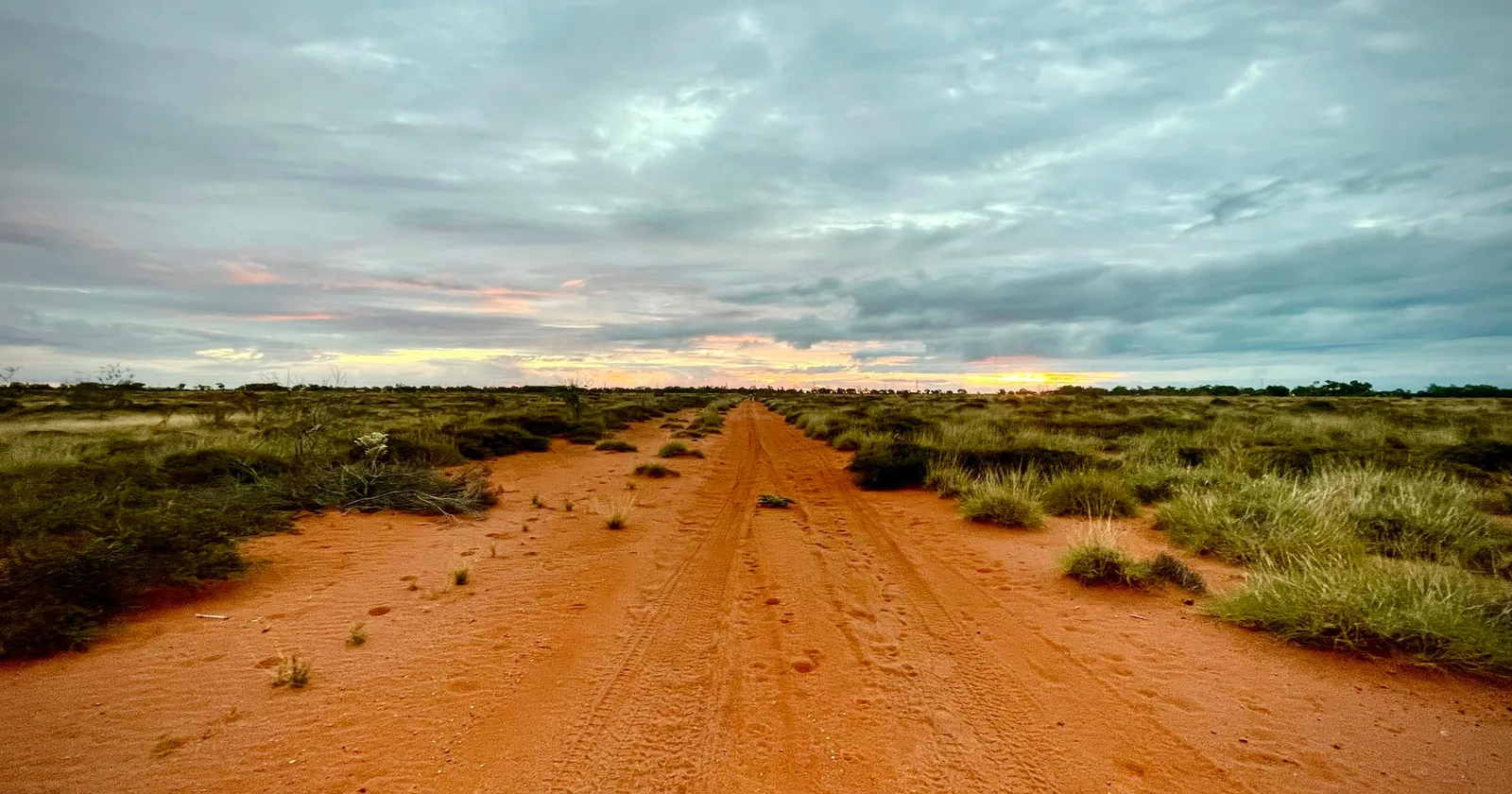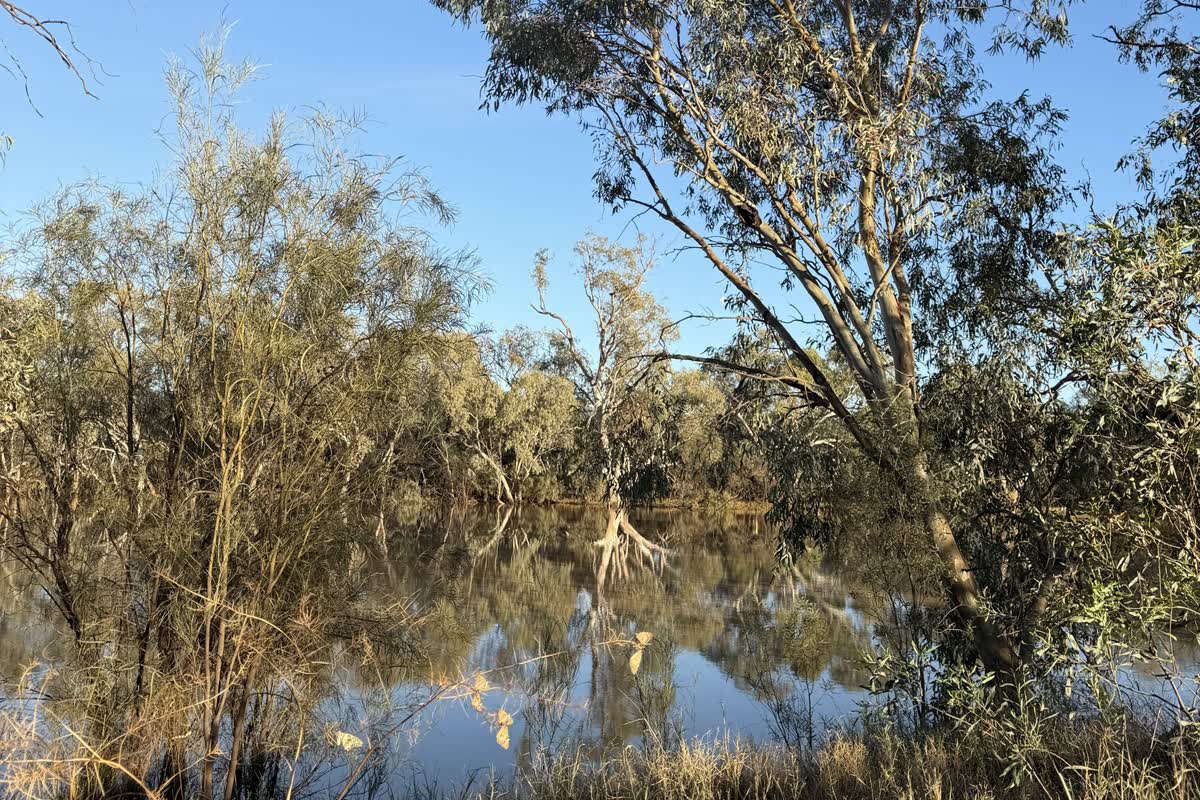
Early in our eight-day Outback Birdwatching and Threatened Species Tour in November 2026, our six guests found a Grey Falcon pair with a fledgling in south-west Queensland.
The Grey Falcon is the rarest of Australia’s six falcons. The federal conservation advice puts the population at fewer than 1,000 mature birds.
What the group found
Peieta Mills, a fifth-generation Cunnamulla local who guides the tour, had put a lot of research into the Grey Falcon. That research pointed her to a spot she thought looked promising, and she took the group to look.
And there they were: a pair of Grey Falcons with a fledgling.
Two guests chose the Grey Falcon and the Chirruping Wedgebill as their highlights. A third named the wedgebill and White-necked Herons in flight, a fourth an Emu with chicks, and a fifth the Pink Cockatoo. Peieta’s own pick was the Grey Falcon.
Why a Grey Falcon matters to birders
Grey Falcons live only in Australia’s arid and semi-arid inland, mostly where less than 500 mm of rain falls a year. They are thinly spread. The federal conservation advice says they have been encountered very infrequently during extensive, targeted surveys. It calls the Grey Falcon “a highly sought after species by birdwatchers and bird photographers”.
The Grey Falcon has been listed as Vulnerable under national environment law since July 2020, and it is also Vulnerable in Queensland. Grey Falcons favour timbered lowland plains, especially acacia scrub crossed by tree-lined watercourses, and they hunt almost entirely birds: doves, pigeons, small parrots and finches.
Grey Falcons breed from June to November, so a fledgling with its parents in November fits the end of the breeding season.
They are not easy to find. In October 2016, thirteen visiting birders spent three days around Cunnamulla looking for one and went home without it.
Why we don’t say where
The same federal advice warns that individuals and commercial birding tour groups may visit nest sites hoping to see the species. That may disturb the birds and affect breeding success. So we follow that advice and never share where Grey Falcons are breeding, and Queensland’s wildlife database treats every Grey Falcon record as confidential. South-west Queensland is as precise as we will be.
The rest of the opening days
The falcons were not the only good news. In the opening days of the tour the group also saw Emus with chicks, Zebra Finches with juveniles, and Australian Bustards, including two young. Bourke’s Parrot, Hall’s Babbler, Glossy Ibis, Singing Honeyeater, pardalotes, a nightjar, Budgerigars and fairy-wrens all made the list.
Science only named Hall’s Babbler in 1964, and it has a Cunnamulla story we will tell in a separate post.
Pink Cockatoos, most days
Pink Cockatoos were the constant. The group found them at three separate places in the opening days, and Peieta says they were seeing them most days.
This is the bird many people still call Major Mitchell’s Cockatoo: white washed with salmon pink, with a crest that fans open in bands of red and yellow. The eastern Pink Cockatoo has been listed as Endangered in Queensland since November 2022 and nationally since March 2023. The national listing follows a severe decline in numbers.
Pink Cockatoos are recorded around Cunnamulla in every month of the year, summer included. Nearby Bowra Wildlife Sanctuary is closed to visitors until early May 2027, but the tour has access to private grazing properties that are closed to the public.
Summer birding
Outback Summer Time is how a summer day runs out here: out before the heat, inside through the middle of the day, and back out from about four. Birding suits that clock. First light is the coolest part of the day, and the birds are at their loudest. The most productive birding hours are the first two to three after dawn and the two to three before sunset.
On this tour Peieta was out every morning from 4:30am. It is hot work. Summer days here average in the mid-30s, and some pass 40. Back at Club Boutique Hotel Cunnamulla, the suites are air-conditioned and the verandah has ceiling fans. In the evening the heat starts to drop, and the sun sets around 7pm.
The Emu chicks, the young bustards and the falcon fledgling all point the same way. Out here the warm months are a birding season of their own.
Will I see a Grey Falcon?
No tour can promise one. Grey Falcons are rare and hard to predict, and most public records in this region fall between April and October. Our November 2026 group found a pair with a young bird early in the tour. What every departure gets is the same research-led guiding.
Join a tour in 2027
The 2027 departures are:
- 17 to 24 January 2027
- 14 to 21 February 2027
- 21 to 28 February 2027
- 14 to 21 March 2027
Each runs Sunday to Sunday, eight days and seven nights, based at the hotel, with return flights from Brisbane, accommodation, meals and guiding included.
Groups are up to 15 people. Solo travellers and beginners are welcome, alongside experienced birders.
Prices, availability and the full itinerary are on the Outback Birdwatching and Threatened Species Tour page. Send an enquiry there or call (07) 4655 1679. Peieta replies to enquiries within one business day.
The full bird list from the falcon day
Here is the group’s list for the day they found the falcons, from Peieta’s field notes.
- Little Black Cormorant
- Pink Cockatoo (Major Mitchell’s Cockatoo)
- Little Corella
- Galah
- Brown Falcon
- Nankeen Kestrel
- Black Kite
- Black-shouldered Kite
- Whistling Kite
- Rainbow Bee-eater
- Australian Ringneck
- Pink-eared Duck
- Yellow-billed Spoonbill
- Chirruping Wedgebill
- Grey Falcon (a pair with a fledgling)
- Crested Pigeon
- Peaceful Dove
- Black-faced Cuckoo-shrike
- White-bellied Cuckoo-shrike
- Emu (with chicks)
- Australian Bustard
- Zebra Finch (with juveniles)
- Tree Martin
- White-breasted Woodswallow
- Blue-faced Honeyeater
- White-plumed Honeyeater
- Sacred Kingfisher
- Australian Magpie
- Magpie-lark
- Fairy Martin
- Yellow-throated Miner
- Australian Raven
- Grey Shrike-thrush
- Welcome Swallow
- Willie Wagtail
- Rufous Whistler
- Eurasian Coot
- Australasian Darter
- Black-fronted Dotterel
- Red-kneed Dotterel
- Australian Wood Duck
- Pacific Black Duck
- Great Egret
- Australasian Grebe
- Hardhead
- White-necked Heron
- Glossy Ibis
- Masked Lapwing
- Pied Stilt
- Wood Sandpiper
- Spiny-cheeked Honeyeater
Also noted but not identified to species: corella, pipit and kookaburra.